Australia is short of electricians: what Nairobi's trades workers should know about the data centre rush
News · 2026-09-05 · 4 min read
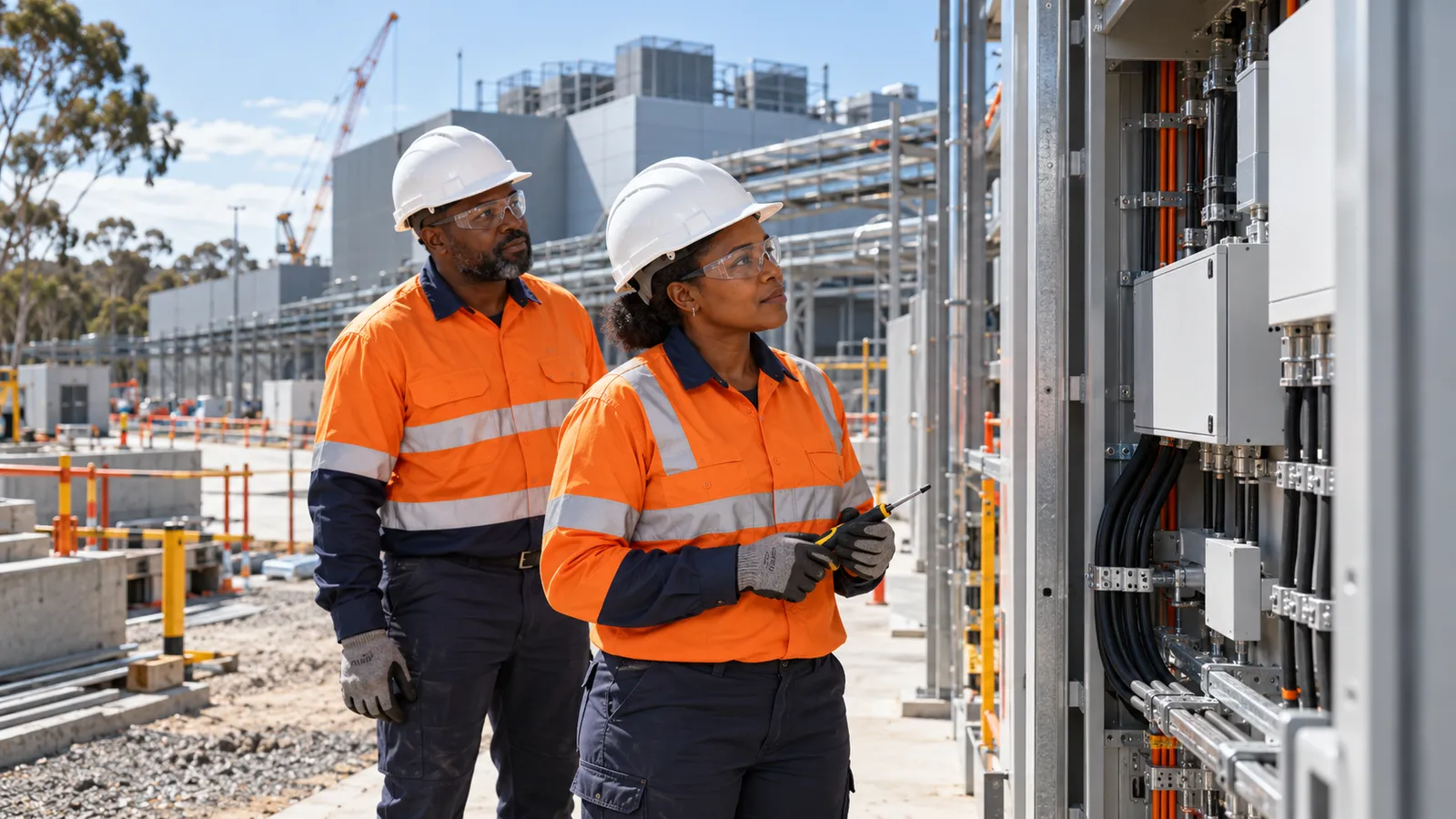
Short answer: Australia does not have enough electricians and energy trades workers to build everything it has promised. A new industry skills report points to roughly 72,000 additional electricians, technicians and related tradespeople needed by 2030, up sharply from the 42,000 shortfall forecast a year earlier. If you hold an electrical or energy trades background in Nairobi, Mombasa or elsewhere in Kenya, that is a signal worth studying, as long as you read it carefully.
Three national projects, one small workforce
| Project | Pressure on trades |
|---|---|
| Data centres | A construction pipeline worth around $150 billion by 2030 according to Treasury figures, with more than 160 data centres operating and another 130 planned, needing an extra 13,000 energy trades workers |
| Housing | The Housing Accord target of 1.2 million new homes |
| Clean energy | The ongoing renewable energy transition, competing for the same people |
All three draw from the same pool at the same time, and nothing suggests the pressure will ease soon.
A wages war at home
Inside Australia the shortage shows up as a fight over pay. Employers are being outbid, apprentices are lured away by large infrastructure projects before they finish training, and small electrical contractors, who train the next generation, lose experienced staff to data centre projects offering pay and conditions they cannot match. Apprenticeship completion sits at a solid 70%, yet that is nowhere near enough new workers fast enough. Industry bodies are calling for hiring quotas on major projects and compensation schemes for small firms that lose trained staff, which suggests government attention will keep growing.
What that can mean for overseas electricians
- Demand that looks sustained rather than a short spike tied to one project.
- Several entry points, since data centres, housing and renewables need similar core skills.
- Regional and project-based work, because large builds are often outside the capital cities.
- Employers with a reason to look at skilled visa pathways when they cannot fill roles locally, though each advert sets its own terms.
Four developments to follow over the next 12–18 months
- Government workforce guidelines for data centre developers, which have encouraged local training pathways since March.
- Updates to occupation lists, where a shortfall of this size often feeds revisions.
- Training incentives such as the existing $10,000 clean energy apprenticeship incentive, which could in time extend to recognised overseas qualifications or bridging programmes.
- Regional project locations, which can fit regional skilled visa streams.
Your Kenyan credentials do not automatically equal an Australian licence, skills assessment or registration. A NITA trade test certificate or a KNEC qualification shows your training, but assessment and any state licensing are separate steps. RPLDirect explains how qualifications are assessed for Australia. Related reading: how Australia's worker construction gap could open doors for overseas tradies and what a shortage of nearly a million tradies means for migrants. See live roles on the jobs page.
Turn the headline into a file you control. Gather your NITA trade test certificate, references from employers that describe the type of installations you worked on, whether commercial, industrial or solar, and dated evidence of the years you spent on site. Add a DCI Certificate of Good Conduct if a police clearance is requested later. A file that a stranger in Australia can read in a few minutes saves weeks when a conversation with an employer or an adviser finally begins.
Common mistakes among trades workers
- Assuming a shortage means an automatic visa or licence.
- Waiting for occupation list changes instead of preparing evidence now.
- Ignoring regional projects when comparing locations.
- Taking advice from anyone other than a migration agent registered with MARA.
Frequently asked questions
How many extra tradespeople does Australia need?
Roughly 72,000 electricians, technicians and related workers by 2030, up from a forecast of 42,000 a year earlier.
Why are data centres such a big factor?
The sector alone is expected to need an extra 13,000 energy trades workers.
Does the shortage mean employers will sponsor me?
It gives employers a reason to look at skilled visa pathways, but each advert states its own terms.
Can I work as an electrician with Kenyan qualifications?
You will need assessment, and some electrical work needs licensing; ask a migration agent registered with MARA.
What is the clean energy incentive?
An existing $10,000 apprenticeship incentive that shows government willingness to fund workforce growth.
Key takeaways
- Australia needs roughly 72,000 more electricians and related tradespeople by 2030.
- Data centres, housing and clean energy compete for the same workers.
- Qualification assessment and licensing are separate from job demand.
- Watch guidelines, occupation lists, incentives and regional projects.
#electrician #australia #trades shortage #data centres #skilled migration #kenya
 Tighter borders in five places at once: what Kenyan applicants should take from the global squeeze
 Carpenter or electrician in Kenya? Why 67,000 closed Australian building firms matter to you
 Employers want a predictable skilled visa system: what that means for Kenyan applicants