Welder or fabricator in Kenya? What Australia's workshop survey says about demand for your trade
Tips · 2026-09-30 · 4 min read
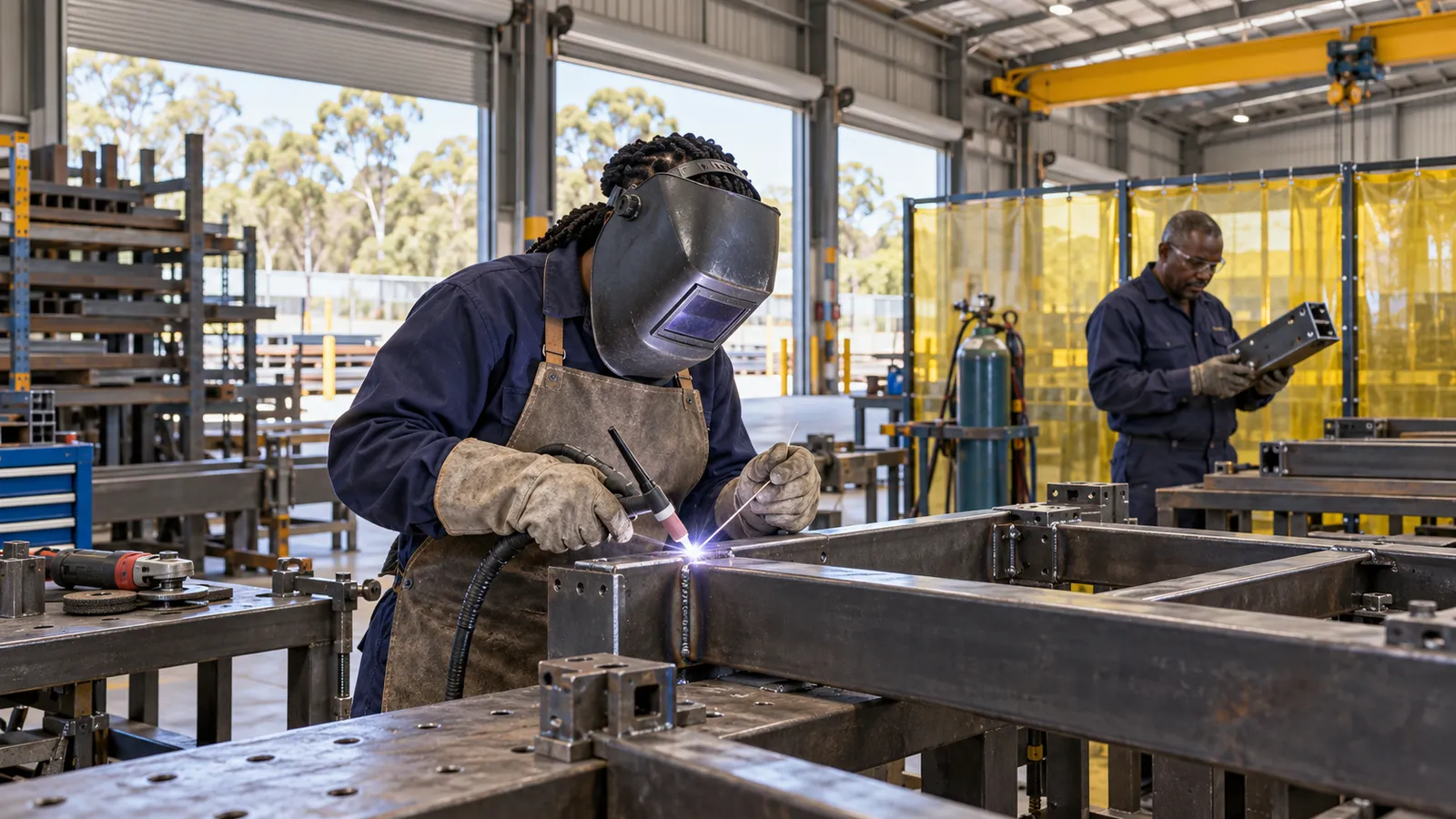
A recent Australian industry survey paints an odd picture: many workshops are worried about where their next project will come from, and yet nearly nine in ten respondents say the country lacks enough qualified welders for the infrastructure and defence work ahead. For welders, boilermakers and fabricators in Nairobi, Mombasa or Eldoret, the lesson is to read the findings carefully rather than rush to conclusions.
The findings in a table
| Finding | What the survey says |
|---|---|
| Not enough qualified welders for coming work | 89.2 per cent of respondents |
| Confirmed work of three months or less | Six in ten respondents |
| No confirmed pipeline at all | One in five |
| Fabrication workshops running below 75 per cent capacity | Almost 60 per cent |
| Imported fabricated products at least sometimes failing Australian standards | 71.4 per cent |
| Failing often or very often | 53.6 per cent |
The apparent contradiction is a mismatch, not weak demand. Businesses cited both a shortage of work and a shortage of skilled staff. Industry leaders argue local firms are not short on capability, only on access to projects, so they are lobbying for stronger local content rules in government purchasing.
What the industry is asking governments for
- Stronger local content requirements in public projects.
- Independent verification of fabricated steel, wherever it is made.
- Backing for a proposed national fabrication authority.
- Help for small and medium-sized firms to adopt advanced manufacturing technology.
- Whole-of-life value, not only the lowest upfront price, when awarding contracts.
Money is tight, but firms still invest
Costs are biting. Some 82.1 per cent reported higher energy prices and 78.5 per cent higher material costs, yet only 28.5 per cent raised their selling prices, and nearly 40 per cent saw gross profit margins fall. Even so, half of respondents increased technology investment, 42.8 per cent put more into staff training and 39.2 per cent into research and development. Employers who invest in people and equipment are usually the ones worth working for.
How to read this from Kenya
- Demand looks long-term. Defence, infrastructure and renewable energy projects take years to deliver.
- Standards are the currency. The strong focus on compliance means employers value people who understand Australian welding and fabrication standards. Keep your weld test records, NITA trade test certificate and project history organised.
- Training is part of the system. The sector wants more apprenticeships, pre-apprenticeship programmes, TAFE pathways and industry-led training. Migrants with strong skills may fit in, and further training can help with skills assessment or licensing.
- The trade wants respect. About 79.5 per cent of respondents felt welding is not given the respect it deserves, and the sector is working to lift its profile, which could improve pay and conditions over time.
A Kenyan certificate does not automatically equal an Australian licence or skills assessment. Check how your qualification would be assessed, and see how RPLDirect explains recognition of prior learning. Our articles on Australia's tradie shortage and why skills can matter more than degrees give wider context, and our jobs page shows what employers advertise.
Common mistakes welders make
- Taking a shortage headline as proof of visa eligibility. A shortage in one industry does not settle anyone's visa position.
- Describing yourself as a "welder" without naming processes, materials and standards you have worked to.
- Waiting to gather certificates and employer letters.
- Skipping a check of current Skills in Demand visa settings, occupation lists and skills assessment requirements on the Department of Home Affairs website.
When you are ready to apply, a clear English CV helps; Build AI CV can structure one around your tickets.
Frequently asked questions
Does the survey mean Australia will sponsor welders?
No. It shows industry views on shortages. Visa rules and sponsorship are separate questions.
Why are workshops short of both work and welders?
The survey points to a mismatch between where projects go and where skills are.
Do imported products matter to me?
They explain the industry's emphasis on standards and local content, which in turn rewards workers who know the standards.
Who should I ask about my case?
Speak to an Australian migration agent on the MARA register.
Key takeaways
- 89.2 per cent of respondents say there are not enough qualified welders for coming work.
- The problem is partly a mismatch between projects and skills.
- Standards, documented experience and training matter.
- A shortage is not the same as visa eligibility, so check current requirements.
#welding #fabrication #australia #trades #skills shortage
 Is a trade certificate now a smarter ticket to Australia than a degree? A view from Nairobi
 Too few homes, not too many migrants? What Australia's skills debate means if you plan to move from Kenya
 Working in admin, finance or customer support in Kenya? What AI means for an Australia move