Only seven bricklaying trainees in Canberra: what the shortage means for Kenyan tradespeople
News · 2026-08-24 · 5 min read
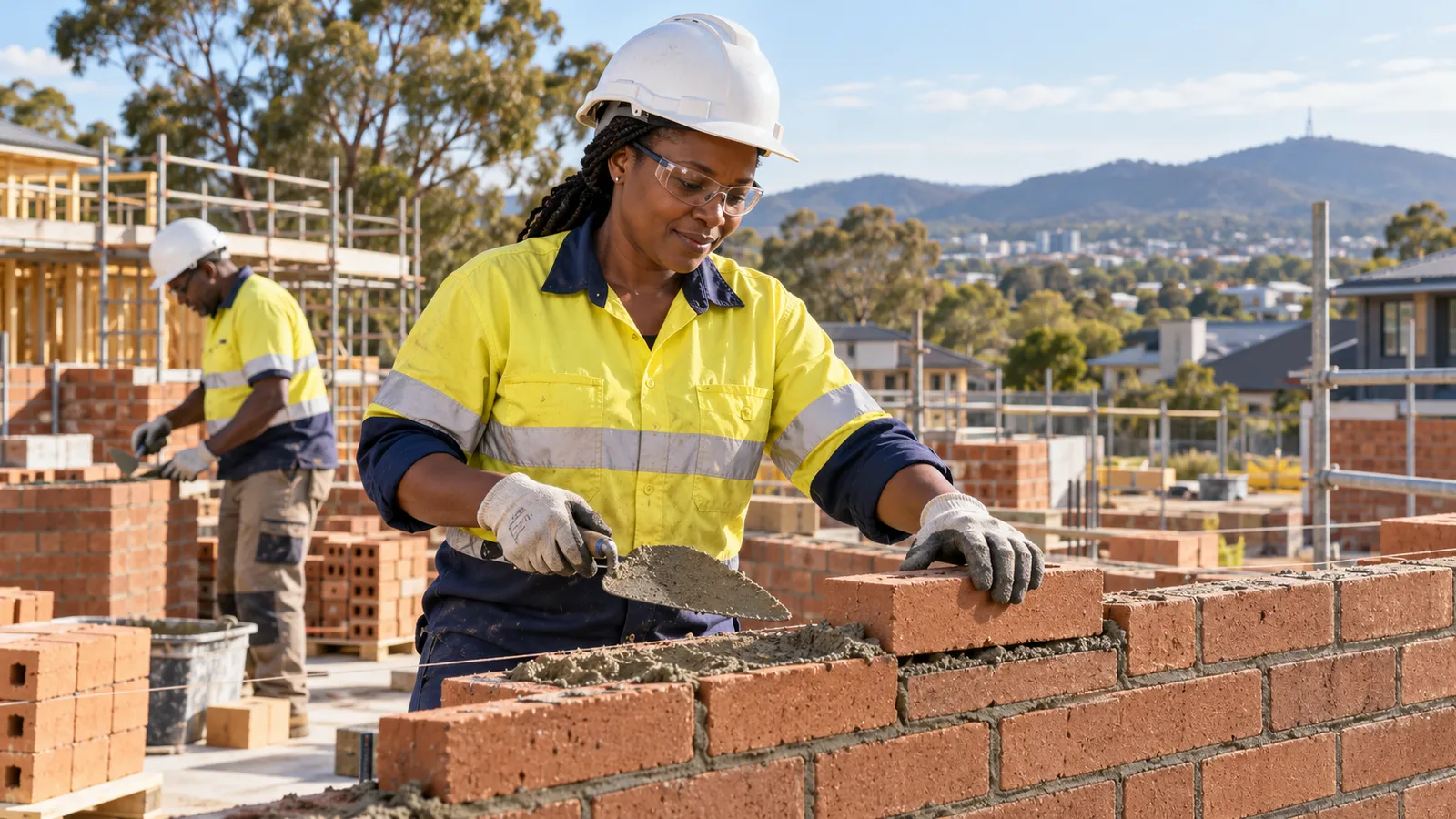
Short answer: Canberra has so few people training as bricklayers that employers say they are short of reliable hands, not short of work. If you are a qualified bricklayer or construction tradesperson in Nairobi, Mombasa or elsewhere in Kenya, that is a useful case study in how to read an Australian labour market. It is also a reminder to prove your skills clearly, because the local system will not do the checking for you.
What the numbers show
Only seven people are currently training to become bricklayers anywhere in the ACT region. Over the same period the construction workforce has grown by 10 per cent while apprentice numbers fell by 20 per cent. The remaining tradespeople are often well past the age at which many of their peers retire, and employers who have run bricklaying businesses for over two decades say they are not short of work, only of anyone dependable to put on the trowel.
An unusual rule
In the ACT, bricklaying is not a licensed occupation. Anyone can legally lay bricks on a commercial or residential site without ever proving they hold a qualification. A veteran trainer with 30 years in the industry has seen the result on site: inconsistent workmanship from people who were never properly trained.
That cuts both ways. It is a quality problem for the industry. For a migrant tradesperson who does hold formal qualifications and real site experience, it means entering a market where properly trained bricklayers are rare and valued.
Three forces behind the gap
| Force | What is happening | Why it lasts |
|---|---|---|
| A broken pipeline | Most apprentices are trained through residential building, which is soft right now, while commercial and infrastructure work, including light rail, keeps demand high | Fewer residential jobs mean fewer employers willing to commit to a four-year apprenticeship |
| Poor retention | Far more apprentices start than finish, because the work is physical and apprentices spend too long labouring instead of building trowel skills | Many leave before they are useful on site |
| An ageing workforce | On many sites, tradespeople over 40 are the norm | Without new arrivals, that expertise retires and is not replaced |
Add the ACT government's commitment to deliver 30,000 new homes by 2030 and the sums stop working. You cannot meet a target of that scale with seven apprentices in the pipeline.
How to read this from Kenya
- Look for demand that is structural, driven by government commitments and long-range housing targets rather than a single project.
- Note that employers openly acknowledge the gap. That tends to mean faster hiring, more willingness to sponsor and less competition, though none of that is a promise.
- Prepare to demonstrate your skills clearly. Collect your NITA trade test certificates, KNEC records and KCSE certificate, plus references and photographs of work you have done. A Kenyan trade certificate does not automatically equal an Australian licence or skills assessment.
- If a police certificate is requested, the usual Kenyan document is the DCI Certificate of Good Conduct through eCitizen.
- Speak to a migration agent registered with the Migration Agents Registration Authority (MARA) about which visa routes fit your trade, and ask the fee first.
Your CV should show what you can build, not only where you worked. Build AI CV can help you present it.
Common mistakes tradespeople make
- Assuming that no licence in one territory means no checks anywhere.
- Arriving with experience but no way to prove it.
- Underestimating how physical the work is.
- Treating a shortage as proof of a job.
More on the trade picture is in our guides to Australia's tradie shortage, the builder shortage and skilled trades as migration pathways.
Frequently asked questions
How many bricklaying apprentices are there in the ACT?
Only seven people are currently training to become bricklayers in the region.
Is bricklaying licensed in the ACT?
No. Anyone can legally lay bricks on a site without proving a qualification, which is a quality concern for the industry.
Does that mean I can work there without a qualification?
The rule is about local licensing, not about visas. A skilled visa may still ask you to show your qualifications and experience, so check with a registered adviser.
Why is the shortage expected to last?
Because the apprenticeship pipeline is broken, retention is weak and the workforce is ageing, while government housing targets keep demand high.
Who can advise me?
An agent registered with MARA for Australia, or a licensed immigration adviser or lawfully exempt person for New Zealand. Ask what the advice costs.
Key takeaways
- Only seven bricklaying trainees are in the ACT region, while the construction workforce grew 10 per cent and apprentice numbers fell 20 per cent.
- Bricklaying is not licensed in the ACT, so proving your own skills matters.
- Demand is structural: a broken pipeline, weak retention and an ageing workforce, plus a target of 30,000 homes by 2030.
- A local trade certificate does not automatically equal an Australian licence or assessment.
- Use registered advice and agree fees in writing.
#bricklayers #canberra #construction trades #skilled migration #kenya
 Could New Zealand offer a visa without a job offer? What the proposed Catalyst Visa means for Kenyan professionals
 Can New Zealand fill its tech jobs at home? What the talent gap means for Kenyan IT professionals
 Is Australia cutting migration a good idea? What its own sums mean for Kenyan job seekers