Australia's harvest visa lane: what it changes for farm hiring, and what it does not
News · 2026-09-26 · 4 min read
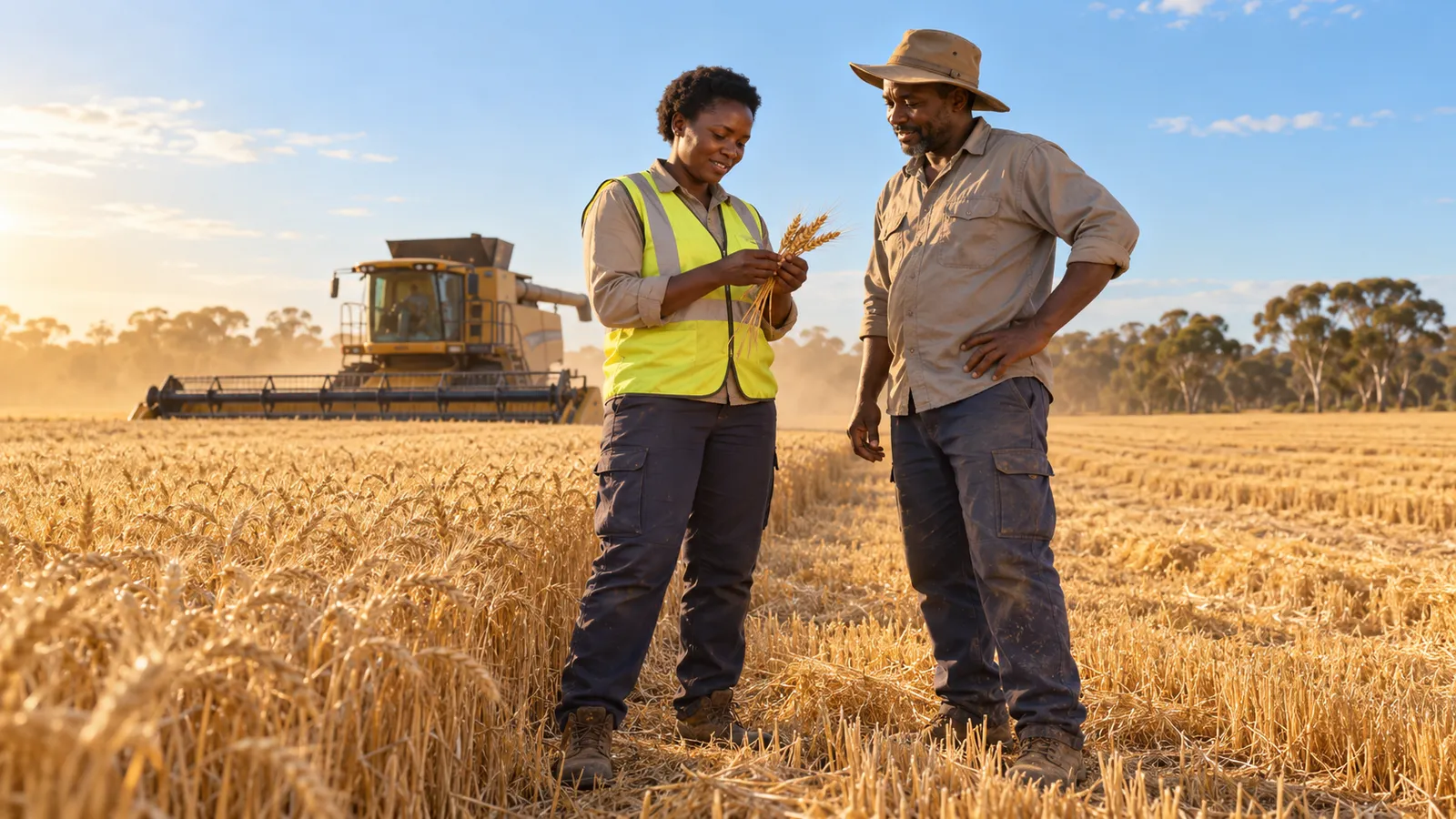
Australia has opened a narrow fast lane for urgent farm labour just as its grain harvest approaches. It helps some applicants, it does not rewrite the rules, and readers in Kenya who follow Australian farm and migration news should understand the difference before drawing conclusions.
The problem the lane tries to solve
Wheat, barley and canola harvests in Australia depend on a workforce that grows every season, with many temporary workers arriving on working holiday maker visas. Those visas are tied to arrangements with eligible countries, and Kenya is not among the countries readers here should plan around, so this is a story to understand, not a route to copy.
The squeeze came from Canberra's plan to trim annual migration by tens of thousands. Farm employers feared fewer visas would be processed at exactly the moment crops needed hands. Industry voices added that waits for working holiday visas had already stretched from days to several months, which is unworkable when the harvest window is short.
What was announced
When this story first appeared in late September 2026, the government had agreed to let industry bodies nominate urgent farm labour cases for faster review. This is not a blanket exemption. Agricultural groups point to critical need, and the Department of Home Affairs then prioritises those specific applications.
The arrangement is understood to run through the national farmers' body and to target applicants who already have a documented agricultural job offer and a start date within a three-month window.
What stays exactly as it was
| Setting | Status |
|---|---|
| Wider visa settings | Unchanged |
| Three-month processing ceiling | Still in place |
| Restrictions on visa extensions | Still tighter |
| New referral lane | Added for urgent cases only |
In other words, this is a triage lane, not a policy reversal. Growers who welcomed it did so carefully. They said they were grateful for the response, but it remains unclear how the mechanism will work in practice, how many applications it can handle, and whether priority will mean genuinely faster approval or only a different queue.
What Kenyan readers can learn from it
First, farm employers want evidence of a real job: a documented offer and a start date. That is the sort of preparation that helps in any Australian work application. Second, Australian settings move often, so use current information. Our overview of new visa processing priorities explains how queues can be reordered, and the jobs page shows the kind of roles that are listed.
If seasonal and harvest work interests you as background reading, Seasonal Jobs Australia gives a sense of how that work is advertised.
For a wider view of Australian settings, see what skilled workers need to know about Australia's migration debate.
One practical habit: when you read about an Australian visa change, ask who it is written for, what is required and what has stayed the same. Here the answers are employers and industry bodies, a documented job offer, and unchanged broader settings. That simple test stops a narrow fix being mistaken for a big reform.
Common mistakes when reading farm-visa news
- Treating a referral lane as a general exemption. It is a process for urgent, documented cases.
- Assuming a working holiday arrangement exists for your country when it does not.
- Planning around news headlines instead of the visa pages that apply to you.
- Paying someone to promise faster processing. Speak to an Australian migration agent on the MARA register if you need advice.
Frequently asked questions
Is the new lane open to anyone?
It is aimed at applicants with a documented agricultural job offer and a start date within a three-month window, nominated by industry bodies.
Does it shorten every wait?
No. It is a referral pathway for urgent cases, and growers themselves are unsure how much faster it will be.
Can I use a working holiday visa from Kenya?
Do not plan around one. Those visas depend on country arrangements, and this article is about the Australian policy, not an option for readers here.
Where should I check current rules?
On the Department of Home Affairs pages, or with a migration agent on the MARA register.
Key takeaways
- Industry bodies can now nominate urgent farm labour cases for faster review.
- The three-month processing ceiling and tighter extension rules remain.
- Employers look for a documented job offer and a close start date.
- Use current official information, and get advice from a MARA-listed agent when needed.
#harvest #visa #australia #farm labour #working holiday
 Australian harvest labour in doubt: what the working holiday cuts mean for farms, and for Kenyan readers
 More than half of international graduates work below their skill level: a reality check for Kenyan applicants
 AI is replacing some office roles in Australia: what Kenyan professionals should check before applying