Unemployment up, builders still short: what Australia's construction gap means for Kenyan tradespeople
News · 2026-08-21 · 4 min read
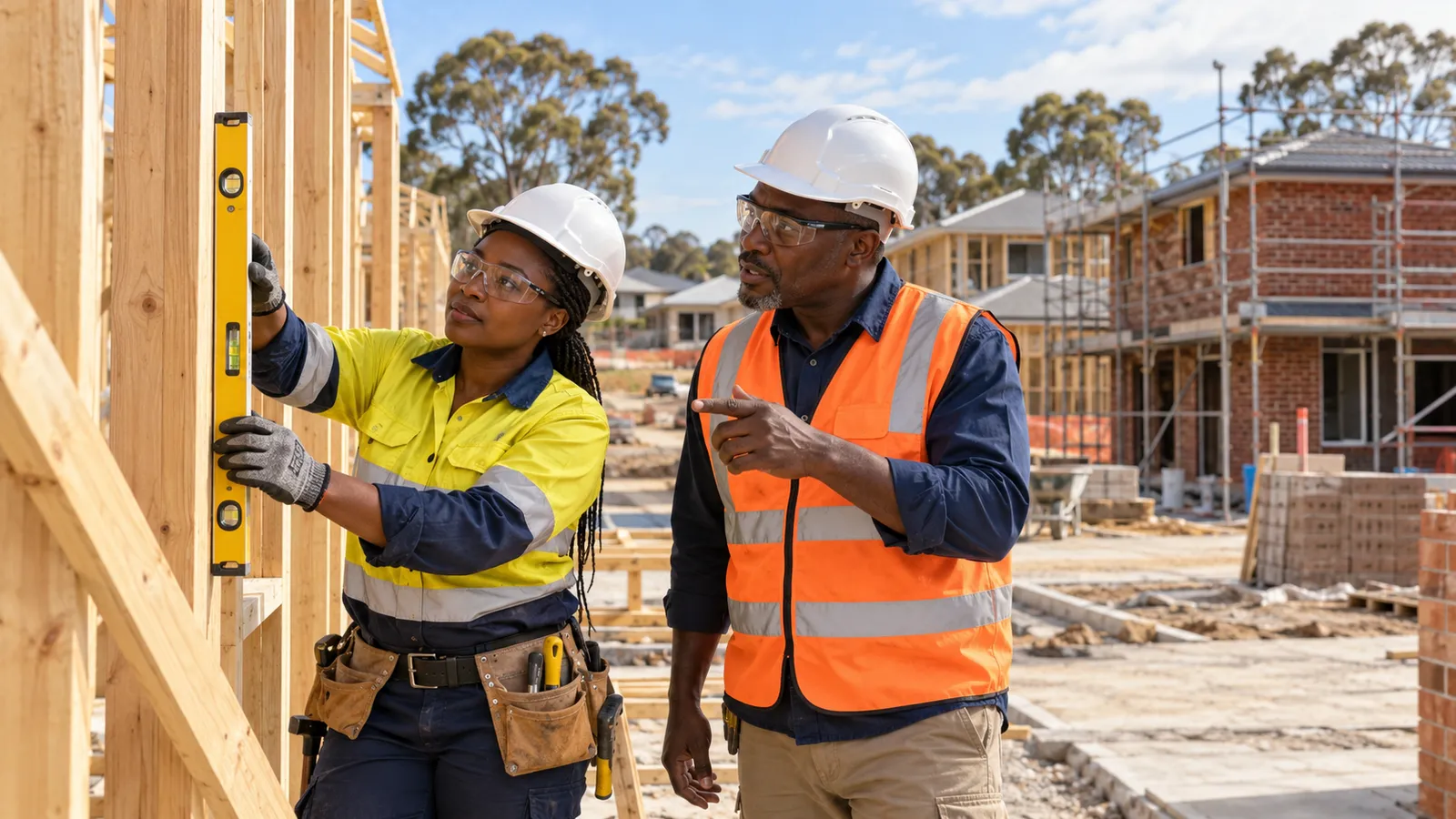
Short answer: Australia's building sector is short of workers even as unemployment edges up, and industry voices say faster, clearer skilled migration is the lever that can help now. For a carpenter, electrician or plumber in Nairobi or Mombasa, that is worth understanding, though it describes calls for reform, not rules that have changed.
The paradox in the numbers
The ABS Labour Force figures for July 2026 show the national unemployment rate ticking up to 4.5 per cent, with the economy shedding around 15,800 jobs, most of them part-time. A softer labour market might suggest less pressure on employers. In construction the opposite holds: the building and construction industry remains hundreds of thousands of workers short, and apprenticeship commencements have fallen to a five-year low, so the future supply of tradies is drying up just as demand for housing accelerates.
The housing target behind it
Australia has committed to building 1.2 million new homes by mid-2029 under the National Housing Accord, on top of Olympic infrastructure and a wave of other projects. None of that is achievable without people to swing hammers, pour concrete and manage sites.
Why training alone is too slow
Industry voices want recent cuts to apprenticeship incentives reversed and fee-free TAFE access expanded, and they are right that these are sensible steps. But training a new generation of tradespeople takes years while the housing crisis is measured in months. That is the timing gap in which skilled migration is meant to do more than it does today.
Where the system falls short, according to industry
The table sets out the problems industry describes next to the fix it asks for.
| Problem | Reform being asked for |
|---|---|
| Slow processing | Faster processing for construction occupations |
| High costs and unclear pathways for overseas-qualified tradespeople | Clearer, more generous pathways, with better recognition of overseas trade certifications |
| Settings that follow capital cities | Regional and employer-sponsored visa settings that reflect where housing demand is highest |
| Construction as one queue among many | Genuine prioritisation of construction roles on skilled occupation lists, covering carpenters, electricians, plumbers and site supervisors |
Why recognition is the quiet issue
Much of the discussion is about speed, but recognition may matter just as much to a trained person coming from abroad. If overseas trade certifications are recognised better, an electrician or plumber spends less time proving what they can already do and more time on site. Until that is real, applicants should expect to document their experience carefully, and to ask early which assessment or licence applies to their trade.
What this means for a Kenyan tradesperson
- Treat the calls for reform as a sign of demand, not as a change in rules.
- Collect KCSE results, NITA trade test certificates and employer references now, and ask whether your trade needs an Australian skills assessment or state licence; a Kenyan certificate does not automatically equal one. RPLDirect explains recognition of prior learning for Australian qualifications.
- Speak to a migration agent registered with the MARA about your options before you pay anyone.
- Look at the job listings to see what employers ask for.
Common mistakes while reform is only a proposal
- Assuming faster processing or better recognition is already in place.
- Planning around a regional visa setting without checking the current rules.
- Waiting for reform instead of preparing evidence.
- Sending a vague CV; Build AI CV can help you foreground tickets and results.
Frequently asked questions
Why is construction short of workers when unemployment is rising?
Because the shortage is in specific trades, while the rise in unemployment is concentrated elsewhere, mostly in part-time jobs.
How many homes is Australia aiming to build?
1.2 million new homes by mid-2029 under the National Housing Accord.
Which trades are named in the reform calls?
Carpenters, electricians, plumbers and site supervisors.
Can migration alone fix the gap?
No. Fixing apprenticeships is a long-term investment; migration is the lever that can deliver workers sooner.
Is this only for Kenyans?
No. Jobs are open to everyone; this article is written for Kenyan readers.
Key takeaways
- Unemployment rose to 4.5 per cent in July 2026, yet construction remains hundreds of thousands of workers short.
- Apprenticeship commencements are at a five-year low.
- Industry wants faster processing, better recognition and real prioritisation of trades.
- Related reading: Australia's productivity debate and New Zealand's project pipeline.
#construction #australia #skilled migration #housing #tradespeople #kenya
 83,000 builders short: what Australia's construction gap could mean for skilled Kenyan tradespeople
 Carpenter or electrician in Kenya? Why 67,000 closed Australian building firms matter to you
 Moving to Australian construction from Kenya? Ask how the site works, not only whether jobs exist